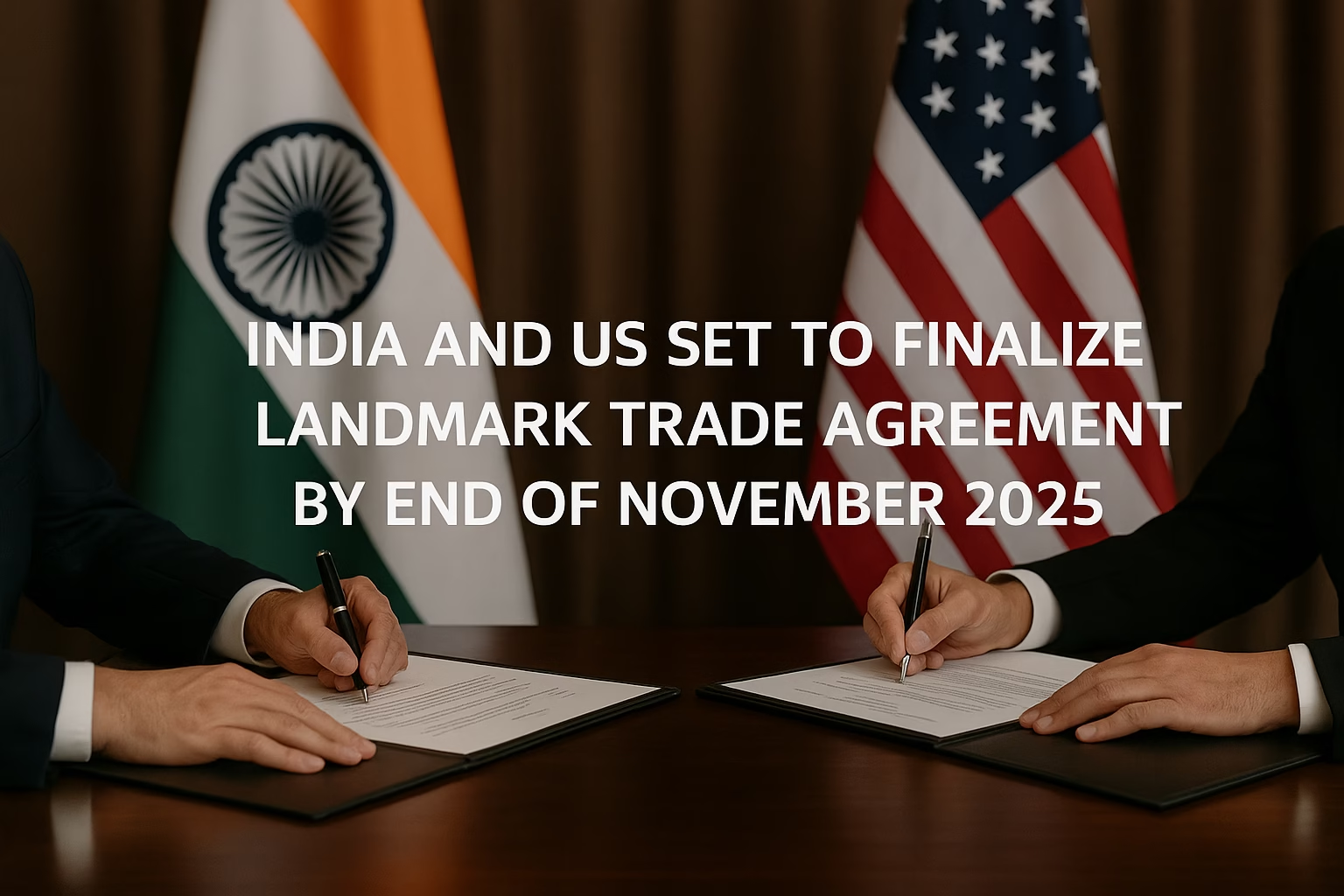
India and US Set to Finalize Landmark Trade Agreement by End of November 2025
In a significant development, India and the United States are poised to finalize a landmark trade agreement by the end of November 2025, according to NITI Aayog CEO B.V.R. Subrahmanyam. This agreement aims to enhance market access, resolve tariff issues, and deepen economic cooperation between the two nations, marking a new chapter in their strategic partnership.
The negotiations between India and the US have been ongoing for several years, with both countries recognizing the importance of a robust economic alliance in an increasingly interconnected world. The proposed agreement is expected to pave the way for greater collaboration in technology, digital commerce, and sustainable development. It will also address longstanding regulatory hurdles, promote mut
### The Geopolitical Context
This trade agreement is unfolding against a complex global backdrop. The Indo-Pacific region has emerged as a major arena for economic cooperation and strategic competition. Both India and the US share concerns about supply chain disruptions, security alliances, and the rising influence of China in global trade networks. By moving forward with this deal, India and the US send a strong message about their commitment to rules-based trade and regional stability. Additionally, the agreement is expected to act as a counterweight against protectionist tendencies seen in various economies post-pandemic.
### Technology Transfer and Innovation
One standout feature of the negotiations is the emphasis on technology transfer and joint research. Both nations are looking to foster innovation by opening R&D hubs, supporting tech startups, and strengthening partnerships on emerging technologies like artificial intelligence, 5G, semiconductors, and green energy. With the global race for technological supremacy heating up, such collaborative efforts are likely to result in breakthrough products, talent exchange, and mutual benefits for consumers and industries on both sides.
### Impact on Education and Human Capital
A less-discussed but important component is the agreement’s expected influence on education, skill development, and student mobility. The US has long been a preferred destination for Indian students, while India’s burgeoning tech sector attracts American professionals and teachers. Eased trade ties are likely to encourage greater academic collaboration, joint degree programs, and an expanded framework for internships and research fellowships. Such intellectual bridges not only build goodwill but also foster the transfer of knowledge and best practices in management, engineering, and financial systems.
### Social, Environmental, and Labor Standards
Negotiators have emphasized integrating strong social and environmental standards in the agreement. This means ensuring fair wages, supporting sustainable business practices, and addressing workplace safety and gender equality. There are also specific provisions to encourage green commerce, waste reduction, and adherence to international climate targets. Both countries are positioning the trade pact not just as a tool for economic growth but as a framework for responsible and inclusive development.
### Voices from Industry and Civil Society
Business associations, policy experts, and advocacy groups from both countries have largely welcomed the progress, but some have also raised concerns. Indian farmers and small manufacturers seek clarity on market access for US products, while American tech giants push for stronger copyright enforcement. Consumer organizations are watching closely for the impact on prices, data privacy, and health standards. Public consultations and industry feedback sessions have played a big role in shaping the narrative and details of the agreement.
### Conclusion: A Blueprint for Modern Commerce
In sum, the India-US trade agreement, expected by the end of November 2025, represents far more than a list of tariff reductions—it stands as a major diplomatic and economic milestone. If successfully implemented, it could become a template for modern, fair, and mutually advantageous commerce in an unpredictable world. Both countries, and indeed the wider international community, await the announcement with optimism, seeing the deal as a signal of hope, partnership, and adaptive prosperity for future generations.
ual investment, and boost exports in key sectors such as agriculture, pharmaceuticals, and IT services.
A key focus of the deal is to streamline customs procedures and reduce tariffs, making cross-border trade more efficient for businesses of both countries. Stakeholders hope this will significantly improve supply chain resilience and unlock new opportunities for small and medium-sized enterprises. Additionally, the digital economy is set to benefit from new frameworks for data security, intellectual property protection, and the promotion of indigenous startups.
Experts highlight that the trade pact will further solidify military, space, and technology collaborations, including joint efforts on climate change mitigation and green technology transfer. By fostering innovation and knowledge exchange, India and the US are aiming to position themselves as leaders in tackling global challenges while supporting homegrown industries and job creation.
On the domestic front, Indian exporters stand to gain easier access to the vast US consumer market, while American companies will find India increasingly attractive for investment and manufacturing. The impact of the agreement is expected to reverberate throughout the Indo-Pacific region, influencing trade norms and partnerships with other economies.
Despite enthusiasm, there are challenges to overcome, including concerns from local industries and interest groups about competition, regulatory alignment, and labor and environmental standards. Both governments assure that the deal will embed safeguards for workers’ rights, environmental responsibility, and data privacy.
Looking ahead, the successful conclusion of these negotiations could serve as a model for constructive, respectful diplomacy in a polarized global economy. As the deadline approaches, the world is watching New Delhi and Washington for signs of progress and the official announcement of this transformative trade deal.
**Tags:** India, United States, Trade Agreement, Economy, Bilateral Relations, Technology, Digital Commerce, Global News
**Categories:** Hot News, Economy, International
