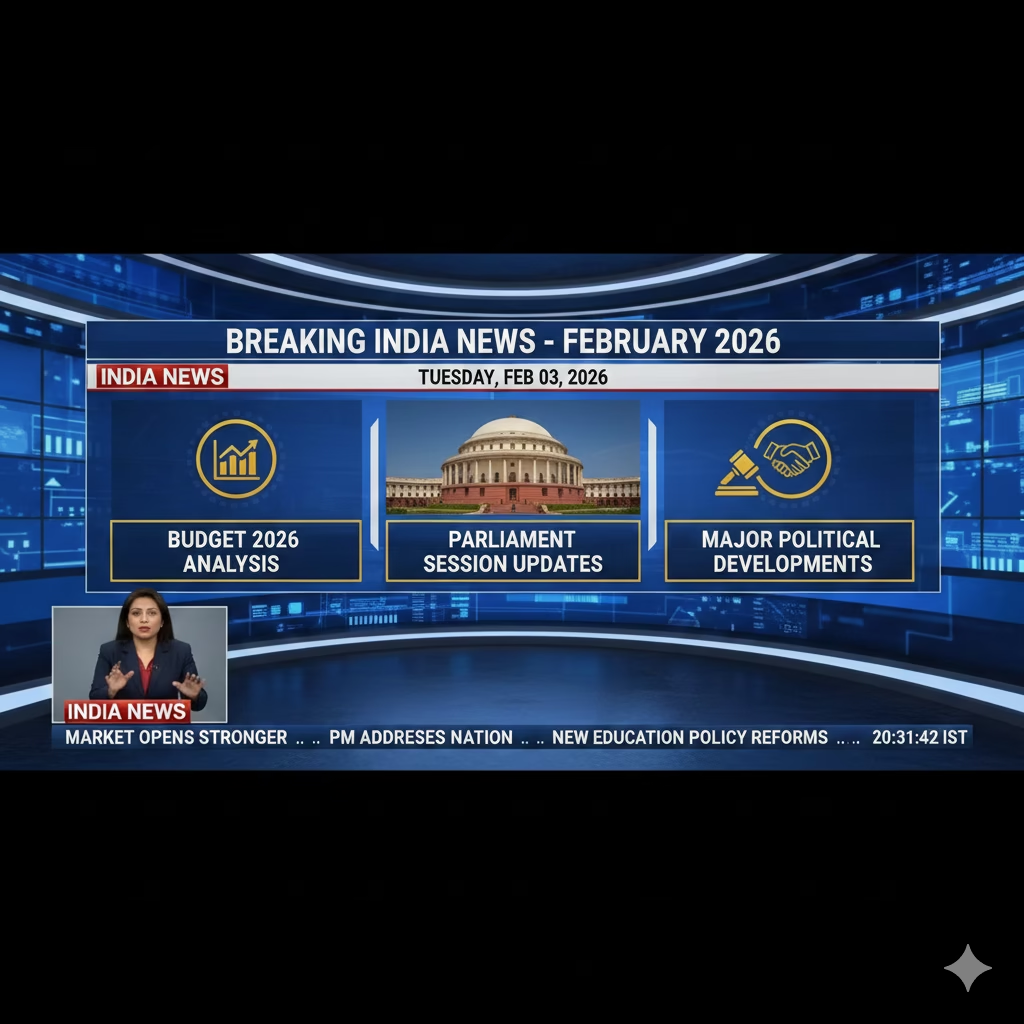
Breaking India News February 2026: Budget 2026 Analysis, Parliament Session Updates, and Major Political Developments
India is witnessing a dynamic start to February 2026, with significant developments across political, economic, and social spheres. From the high-stakes Budget 2026-27 presentation to intense Parliament sessions and diplomatic breakthroughs, the nation is at a crucial juncture. This comprehensive analysis covers the latest breaking news from India that every citizen needs to know.
Union Budget 2026-27: Infrastructure Push and Economic Priorities
Finance Minister Nirmala Sitharaman presented her record ninth consecutive Union Budget on February 1, 2026, marking a significant milestone in India’s fiscal planning. The Budget 2026 highlights reveal a strong emphasis on infrastructure development, particularly in poll-bound states including Assam, West Bengal, Tamil Nadu, and Kerala.
Key Budget 2026 Announcements
The Union Budget 2026-27 priorities focus on three main ‘kartavyas’ or responsibilities that will shape India’s economic trajectory. The government has announced a massive infrastructure push with special attention to railways, rare earth minerals development, and port modernization. This strategic allocation aims to boost economic growth while maintaining fiscal discipline.
Defence spending has emerged as a major highlight, with the government planning to increase defence expenditure by 20% – the largest hike in recent years. This decision comes after Operation Sindoor and reflects India’s heightened focus on national security and indigenous defence manufacturing under the Make in India initiative.
The Budget 2026 tax implications for common Indians show a stable tax regime with no major changes to income tax slabs. However, the government has introduced several regulatory changes effective from February 1, 2026, including new FASTag usage rules and tobacco regulations that will impact daily commuters and consumers.
16th Finance Commission Recommendations
A groundbreaking development accompanying the budget is the 16th Finance Commission’s recommendation for 41% tax devolution to states, with an increased share allocated to South India. This move addresses long-standing concerns about fiscal federalism and aims to ensure more equitable resource distribution across Indian states.
Parliament Session 2026: Political Confrontations and Key Debates
The Budget Session of Parliament has been marked by unprecedented drama and intense political confrontations. On February 3, 2026, Parliament witnessed chaotic scenes as the Lok Sabha suspended eight Opposition MPs, including Congress members, amid heated debates over the Budget 2026 priorities and national security matters.
Army Chief Memoir Controversy
Parliament erupted over discussions surrounding the Army Chief’s memoir, which has become a focal point of political debate. The controversy centers around revelations about India’s defence strategy and military operations, triggering sharp exchanges between the ruling party and opposition benches.
Rahul Gandhi and Opposition Showdown
Congress leader Rahul Gandhi was barred from speaking in the Lok Sabha during a crucial debate on Ladakh border tensions, escalating the confrontation between the Centre and opposition parties. This development has intensified political discourse around border security, with eight Congress MPs facing suspension for what authorities termed “unruly behavior.”
The Ladakh issue has become particularly contentious, with activist Sonam Wangchuk being detained by authorities for allegedly “instigating people in the border area.” This move has sparked widespread debate about civil liberties and border area management.
India’s Diplomatic Victories and International Relations
India-US Trade Deal: Breaking Barriers
In a major diplomatic breakthrough, US President Donald Trump announced a trade deal with India following a telephonic conversation with Prime Minister Narendra Modi. The United States has agreed to cut tariffs on Indian imports to 18%, marking a significant win for India’s export sector and bilateral economic relations.
This India-US trade agreement 2026 is expected to boost exports across multiple sectors including pharmaceuticals, textiles, and technology services. The deal represents a pragmatic shift in India’s foreign policy approach, balancing economic interests with strategic partnerships.
India’s BRICS 2026 Chairship
External Affairs Minister Dr. S. Jaishankar officially launched India’s BRICS 2026 Chairship, unveiling the logo, theme, and official website. This marks India’s first BRICS leadership in its expanded 10-nation configuration. The 18th BRICS Summit theme is “Building for Resilience, Innovation, Cooperation and Sustainability,” reflecting India’s vision for multilateral cooperation.
India-China Relations: Measured Thaw
India’s relationship with China is experiencing a cautious warming, with PM Modi’s participation in the SCO Summit in Tianjin alongside President Xi Jinping and President Vladimir Putin. Limited easing of restrictions on travel and trade between the two countries signals a tactical thaw, though security concerns remain paramount.
Technology and Digital India Initiatives
Semiconductor Mission 2.0 and Electronics Manufacturing
The Budget 2026 unveiled Semiconductor Mission 2.0, with the electronics parts scheme outlay being doubled. This initiative is crucial for India’s ambitions to become a global semiconductor manufacturing hub and reduce dependence on imports. The move aligns with the Digital India vision and Make in India objectives.
BIOPHARMA SHAKTI Initiative
The Union Budget 2026-27 proposed BIOPHARMA SHAKTI, a new initiative aimed at strengthening India’s pharmaceutical and biotechnology sectors. This program is expected to boost research and development, making India a global leader in affordable healthcare and pharmaceutical innovation.
AI Impact Summit 2026
India will host the AI Impact Summit in February 2026, aligning with Prime Minister Modi’s vision of technology for public good. The summit will focus on harnessing Artificial Intelligence to address challenges in healthcare, education, agriculture, climate change, and governance.
Economic Outlook and Growth Projections
India continues its position as the fastest-growing major economy globally, with growth estimated at 7.2% for 2025-26. Private consumption remains the main growth driver, supported by rising household expenditure and improving consumer confidence.
Market Reactions to Budget 2026
Financial markets reacted sharply to Budget announcements, with Sensex plunging over 1,500 points and Nifty dropping nearly 500 points immediately after the budget presentation. Analysts attribute this volatility to concerns over fiscal priorities and sectoral allocations, though long-term growth prospects remain positive.
Fiscal Consolidation Efforts
The government is making significant strides in fiscal consolidation, with the fiscal deficit reduction being a key priority. Revenue expenditure declines are outweighing revenue losses from recent tax cuts, demonstrating disciplined fiscal management.
Environmental and Infrastructure Developments
Wetlands Conservation
India added two new wetlands to the Ramsar List ahead of World Wetlands Day 2026, demonstrating commitment to environmental conservation. This addition brings India’s total Ramsar sites to a significant number, highlighting the country’s biodiversity conservation efforts.
Infrastructure Projects in Key States
The Budget 2026 infrastructure push focuses on poll-bound states with strategic railway projects, port development, and road connectivity improvements. These projects are expected to create employment opportunities and boost regional economic growth.
Social Sector and Women Empowerment
The Minister of State for Women and Child Development will lead the Indian delegation at the 64th UN Commission for Social Development, highlighting India’s commitment to gender equality and child welfare on the global stage.
Challenges and Risk Assessment
According to recent assessments, cyber insecurity emerges as India’s most significant national risk, ahead of inequality and weak public services. The government is prioritizing cybersecurity infrastructure and digital defense mechanisms to counter growing threats.
The Indus River Basin has been flagged as a potential flashpoint for future water conflicts between India and Pakistan, requiring careful diplomatic management and water-sharing negotiations.
Conclusion: India’s Path Forward in 2026
As India navigates through February 2026, the nation stands at a critical juncture with multiple opportunities and challenges. The Union Budget 2026-27 sets an ambitious agenda for infrastructure development and economic growth, while political developments in Parliament reflect the vibrant democratic discourse.
The diplomatic victories including the India-US trade deal and BRICS chairship position India strategically on the global stage. Technology initiatives like Semiconductor Mission 2.0 and the AI Summit demonstrate India’s commitment to becoming a technology powerhouse.
For Indian citizens, these developments translate into potential economic opportunities, improved infrastructure, and enhanced global standing. However, challenges related to cybersecurity, water resources, and geopolitical tensions require sustained attention and strategic responses.
Stay informed about these crucial developments as they shape India’s future trajectory. Follow our coverage for regular updates on Budget 2026 implementation, Parliament proceedings, and breaking news from across the nation.
