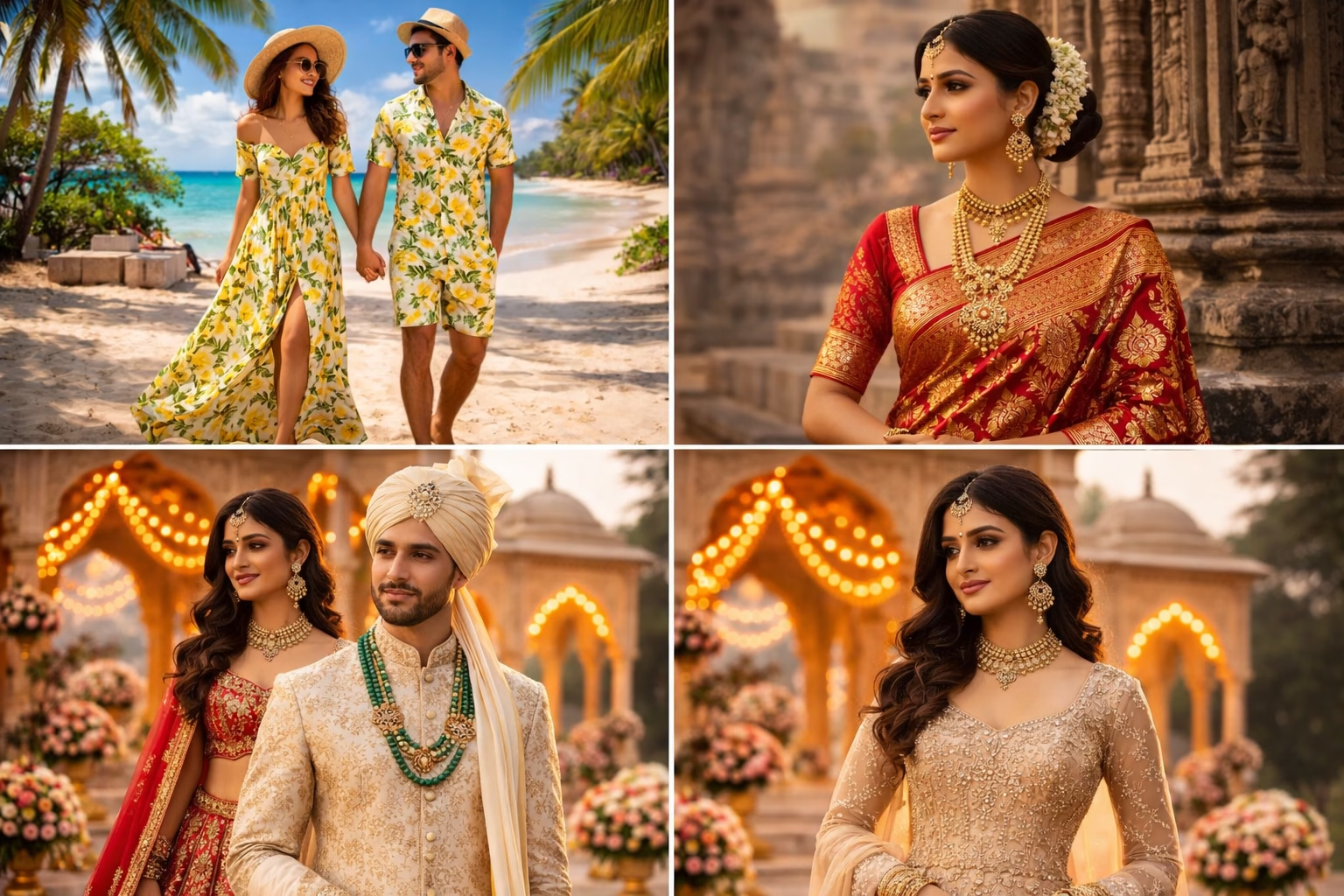
Top 15 Most Beautiful Traditional Cultural Dresses from India
India is a land of incredible diversity — and nowhere is that diversity more visible than in its traditional clothing and cultural dress. With 28 states and 8 union territories, each region of India has its own unique textile tradition, fabric style, embroidery technique, and dress culture that has been passed down through generations for hundreds of years.
📋 In This Article:
- Dhoti — The Ancient Drape of India
- Phulkari — Punjab’s Floral Embroidery Tradition
- Mekhela Chador — Assam’s Silk Treasure
- Ghagra Choli — Rajasthan’s Colorful Pride
- Mundum Neriyathum — Kerala’s White Elegance
- Bandhgala Suit — India’s Power Dress
- Pattu Pavadai — South India’s Girls’ Traditional Dress
- Anarkali Suit — Mughal Grace Revived
- Kurta Pajama — India’s Everyday Classic
- Frequently Asked Questions
Why Indian Traditional Dress Is Unlike Anything Else in the World
Before we dive into the list, it’s worth understanding why Indian traditional clothing is so special. India has been a center of textile craftsmanship for over 5,000 years. Ancient Indian weavers and artisans developed techniques — from Zari goldwork to Ikat dyeing — that are still practiced today and recognized globally as UNESCO Intangible Cultural Heritage.
Each traditional dress in India tells a story. It reflects the geography, climate, religion, and history of the region it comes from. A Kashmiri Pashmina shawl represents the freezing winters of the Himalayas and the patience of hand-weaving. A Rajasthani Bandhani tie-dye saree reflects the vibrant, bold spirit of desert culture. This is clothing with meaning — not just fashion.
In recent years, Indian traditional dress has also seen a massive global revival. Bollywood, international fashion weeks, and celebrities like Priyanka Chopra and Deepika Padukone wearing traditional Indian outfits on global red carpets have put India’s fashion heritage firmly on the world map. Today, the Indian ethnic wear market is valued at over ₹1.5 lakh crore and growing every year.
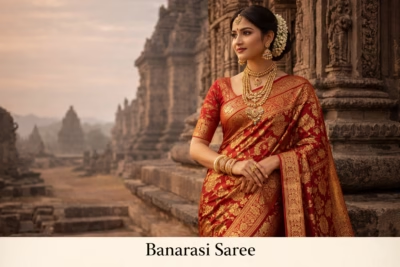
1. The Saree — India’s Most Iconic Traditional Dress
If there is one garment that represents India to the entire world, it is the saree. This unstitched piece of fabric — typically 5 to 9 yards long — is draped around the body in dozens of different styles depending on the region. It is worn by women across every state of India, every religion, and every age group. The saree is not just clothing — it is a living, breathing symbol of Indian womanhood and cultural identity.
Most Famous Types of Indian Sarees
- 🌟 Banarasi Saree (Uttar Pradesh) — Woven with real gold and silver Zari threads in Varanasi, these sarees are among the most luxurious in the world. They are a must-have for Indian brides and often passed down as family heirlooms. A genuine Banarasi silk saree can take up to 6 months to weave by hand.
- 🌟 Kanjivaram / Kanchipuram Saree (Tamil Nadu) — Known for their heavy pure silk fabric, bold contrasting borders, and temple-inspired motifs, Kanjivaram sarees are the pride of South Indian weddings. The silk used is so dense that a Kanjivaram saree can literally stand on its own.
- 🌟 Paithani Saree (Maharashtra) — Handwoven in Paithan town using pure silk and gold thread, with distinctive peacock motifs on the pallu. These sarees take months to complete and are considered priceless works of art.
- 🌟 Bandhani Saree (Rajasthan & Gujarat) — Created using the ancient tie-and-dye technique, Bandhani sarees feature thousands of tiny dots forming intricate patterns. The process involves tying small portions of fabric with thread before dyeing — entirely by hand.
- 🌟 Chanderi Saree (Madhya Pradesh) — Light, sheer, and incredibly elegant. Chanderi fabric is woven with a mixture of silk and cotton, giving it a beautiful translucent quality loved by women across India.
In our view, the saree’s enduring appeal lies in the fact that it is infinitely versatile. A cotton saree worn casually by a vegetable vendor in Chennai and a Banarasi silk saree worn by a bride in Varanasi are both “sarees” — yet they couldn’t be more different. That range of expression is what makes it truly extraordinary.
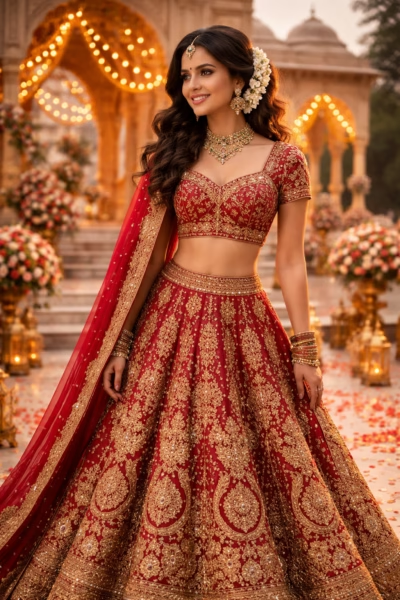
2. Lehenga Choli — The Queen of Indian Celebrations
The lehenga choli is arguably the most glamorous piece of traditional Indian clothing in existence. It consists of three pieces: a flared skirt (lehenga), a fitted blouse (choli), and a dupatta (scarf). Worn predominantly at weddings, festivals, and celebrations across North India, the lehenga choli is a symbol of joy, color, and festivity.
Regional Variations of the Lehenga
- Rajasthani Lehenga — Features mirror work (Shisha embroidery), bright reds, oranges, and pinks with heavy silver jewelry. This is the traditional bridal outfit of Rajasthan.
- Gujarati Lehenga (Chaniya Choli) — Known for its colorful Bandhani and Patola fabric, worn especially during Navratri with Garba dancing. The swirling movement of the skirt during Garba is one of India’s most visually stunning cultural sights.
- Mughal-inspired Lehenga — Features heavy Zari embroidery, velvet fabric, and intricate floral patterns inspired by Mughal court fashion. Often worn by brides across North India.
Modern lehenga cholis by designers like Sabyasachi Mukherjee, Manish Malhotra, and Tarun Tahiliani have taken this traditional garment to global runways — while staying rooted in Indian craft traditions like hand embroidery, block printing, and natural dyeing.
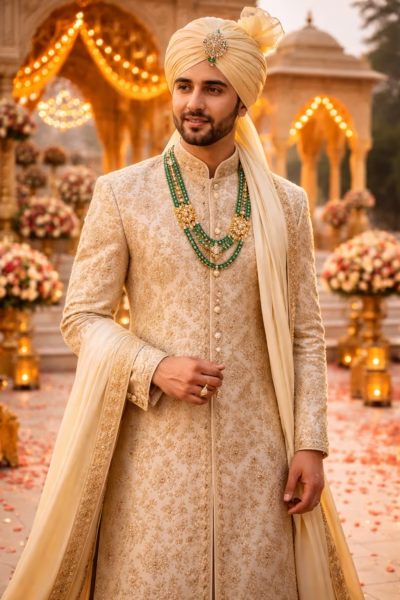
3. Sherwani — Royal Elegance for Indian Men
The sherwani is the most regal traditional outfit for Indian men — a long, formal coat-style garment typically worn over a kurta and churidar. With roots in Mughal court fashion, the sherwani has been worn by maharajas, nawabs, and grooms for centuries. Today, it remains the undisputed choice for Indian grooms and men attending formal cultural events.
A classic sherwani is made from rich fabrics like brocade, velvet, or raw silk, with intricate embroidery running along the collar, cuffs, and hem. Colors range from ivory and cream for grooms to deep jewel tones like navy, burgundy, and forest green for wedding guests. Paired with a safa (turban) and mojari shoes, a well-fitted sherwani is one of the most striking outfits a man can wear anywhere in the world.
Types of Sherwani
- Jodhpuri Sherwani — Shorter in length with a Western suit-style structure, originating from the royal courts of Jodhpur, Rajasthan.
- Hyderabadi Sherwani — Floor-length, heavily embroidered, inspired by the Nizam of Hyderabad’s court fashion.
- Lucknawi Sherwani — Features the delicate Chikankari embroidery work of Lucknow — subtle, refined, and incredibly beautiful up close.
4. Salwar Kameez — Where Comfort Meets Indian Culture
The salwar kameez is the most widely worn traditional dress across North and Central India for women of all ages. It consists of a long tunic (kameez), loose pants (salwar), and a dupatta. Its popularity comes from a perfect balance of modesty, comfort, elegance, and cultural identity — making it suitable for everything from everyday wear to festive occasions.
Regional Styles of Salwar Kameez
- Punjabi Suit — Bright, bold, with Phulkari embroidery. The Punjabi suit is perhaps the most recognizable version globally, thanks to Bollywood and the Punjabi diaspora worldwide.
- Patiala Suit — Features extremely voluminous, pleated Patiala salwar that gathers at the ankles. It’s comfortable, playful, and uniquely Punjabi.
- Anarkali Suit — A flowing, frock-style kameez inspired by Mughal courtesan fashion. We cover this in detail later in the article.
- Kashmiri Suit — Made from Pashmina or wool fabric with delicate Kashmiri embroidery (Kashida) featuring chinar leaves, paisleys, and floral motifs.
5. Dhoti — The Ancient Drape of India
The dhoti is one of the oldest garments in human history — a simple, unstitched piece of white or off-white cotton fabric that is draped around the waist and legs. It has been worn by Indian men for over 4,000 years and remains deeply embedded in Indian cultural, religious, and political identity. Mahatma Gandhi famously adopted the simple white dhoti as a symbol of India’s grassroots independence movement.
Different regions of India drape the dhoti differently. The Pancha style of Tamil Nadu, the Dhoti-kurta combination of Bengal, and the Veshti of Kerala all represent distinct regional identities while sharing the same basic garment. The dhoti is still worn daily by millions of Indian men, particularly in rural areas, and is considered mandatory attire for religious ceremonies and rituals across India.
6. Phulkari — Punjab’s Breathtaking Floral Embroidery
Phulkari, which literally translates to “flower work” in Punjabi, is one of India’s most celebrated embroidery traditions. Originating in Punjab, Phulkari involves hand-stitching colorful silk thread (called Pat) onto coarse cotton fabric (Khaddar) using a darning stitch from the wrong side — creating stunning geometric and floral patterns that seem to bloom on the fabric.
Traditionally, Phulkari was made by mothers and grandmothers for their daughters’ trousseau — each piece taking months of careful work. The most special form is called Bagh, where the embroidery covers the entire surface of the fabric, leaving no base cloth visible. A true Bagh Phulkari is a rare and priceless treasure of Punjabi culture.
Today, Phulkari has been given a GI (Geographical Indication) tag by the Indian government, protecting this ancient craft. You’ll find it on dupattas, suits, sarees, and even modern Western outfits — proof that this centuries-old art form is very much alive and thriving.
7. Mekhela Chador — Assam’s Silk Treasure
From the lush river valleys of Assam comes one of India’s most graceful and distinctive traditional dresses — the Mekhela Chador. This two-piece garment consists of the Mekhela (a cylindrical skirt wrapped around the lower body) and the Chador (a longer piece draped over the upper body and tucked into the Mekhela at the front).
What makes Mekhela Chador extraordinary is the fabric it’s made from. Assam is home to the world’s rarest silks — Muga silk (golden silk, produced only in Assam), Endi silk, and Pat silk. Muga silk, in particular, is unique to Assam and has a natural golden sheen that actually becomes more lustrous with every wash — something no other silk in the world can claim.
Traditional Mekhela Chadors feature woven motifs of animals, geometric patterns, and nature-inspired designs — each pattern carrying deep cultural significance in Assamese society. It is the traditional dress for festivals like Bihu and is worn with immense pride by Assamese women across the world.
8. Ghagra Choli — Rajasthan’s Explosion of Color
If you had to choose one outfit that captures the vibrant, fearless spirit of Rajasthan, it would be the Ghagra Choli — also known as Lehenga Choli in other parts of India. The Ghagra is a long, heavily flared skirt, the Choli is a fitted short blouse, and the Odhani is the draped dupatta. Together, they create an outfit of breathtaking visual impact.
Rajasthani Ghagra Cholis are famous for their Shisha (mirror) work, Gota Patti (gold ribbon) embroidery, Bandhani (tie-dye) patterns, and brilliant color combinations. Bright pinks, deep oranges, royal blues, and vivid yellows — often all on the same outfit — reflect Rajasthan’s philosophy that life in the desert should be as colorful as possible.
The Ghagra Choli is not just a women’s celebration outfit — it’s a cultural statement. Seeing hundreds of women dancing in Ghagra Cholis at a Rajasthani folk festival is one of the most visually stunning experiences India has to offer.
9. Mundum Neriyathum — Kerala’s Pure White Elegance
In a country known for explosion of color in its traditional dress, Kerala’s Mundum Neriyathum stands apart for its understated, pure elegance. This traditional dress for women consists of two pieces of plain white or cream cotton/silk fabric with a distinctive golden Kasavu border — that’s it. No heavy embroidery, no mirror work, no bold patterns. Just clean white fabric and gleaming gold borders.
And yet, the Mundum Neriyathum is one of the most beautiful traditional dresses in all of India. There is something profoundly elegant about its simplicity. The golden Kasavu border against white fabric reflects Kerala’s aesthetic of “less is more” — a philosophy rooted in the state’s traditions of Ayurveda, classical arts like Kathakali and Mohiniyattam, and a deep connection with nature.
Worn for Onam (Kerala’s harvest festival), temple visits, and cultural ceremonies, the Mundum Neriyathum is a UNESCO-recognized cultural heritage garment and one of India’s most distinctive regional dress traditions.
10. Bandhgala Suit — India’s Power Dress
The Bandhgala suit — also called the Nehru suit or Jodhpuri suit — is India’s answer to the Western business suit, and in our opinion, it looks considerably better. This formal outfit features a mandarin collar (band collar), a fitted jacket, and straight trousers. It originated in the royal courts of Jodhpur and was later popularized globally by India’s first Prime Minister, Jawaharlal Nehru — which is why it’s often called the “Nehru jacket” internationally.
The Bandhgala has seen a massive global revival in recent decades. From James Bond villain costumes to Jared Leto at the Met Gala, the Bandhgala’s distinctive silhouette has captured global fashion imagination. In India, it remains the go-to formal outfit for politicians, executives, and grooms who want to look powerful, dignified, and unmistakably Indian.
11. Pattu Pavadai — South India’s Traditional Girls’ Dress
In Tamil Nadu, Karnataka, Andhra Pradesh, and Kerala, the Pattu Pavadai (also called Langa Voni or Davani) is the traditional dress worn by young girls for festivals, temple visits, and cultural ceremonies. It consists of a silk skirt (Pavadai) and a matching silk top (Dhavani) in rich, vibrant colors.
Pattu Pavadai silk fabrics are woven in the same tradition as Kanjivaram sarees — with pure silk yarn and gold Zari borders. Seeing a young girl dressed in a deep red Pattu Pavadai with gold jewelry at a South Indian temple festival is one of those images that stays with you forever. It perfectly represents how India’s textile traditions are passed down from generation to generation, keeping ancient craft alive through everyday cultural practice.
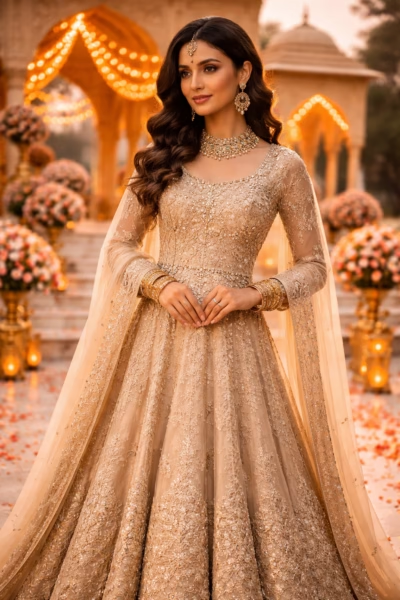
12. Anarkali Suit — Mughal Grace Revived
Named after the legendary courtesan Anarkali of the Mughal court, the Anarkali suit features a long, flowing, frock-style top that flares out from the waist, paired with fitted churidar or straight pants. It became a fashion sensation in Bollywood in the 1950s and has never gone out of style since.
What makes the Anarkali suit so enduringly popular is its universally flattering silhouette. The fitted bodice and flowing skirt-style bottom work beautifully on all body types. Modern Anarkali suits come in georgette, chiffon, silk, velvet, and net fabrics — with hand embroidery, sequin work, Zari, and Resham thread detailing that can range from simple and elegant to absolutely extravagant.
13. Kurta Pajama — India’s Timeless Everyday Classic
No list of Indian traditional dress is complete without the kurta pajama — the most widely worn traditional outfit for men across the entire country. A kurta is a long, loose-fitting shirt that falls between the knee and mid-calf, worn over pajama (straight or tapered trousers). It is India’s equivalent of a comfortable, culturally rooted everyday outfit.
The beauty of the kurta pajama is its incredible range. A simple white cotton kurta paired with white pajama is perfectly appropriate for a temple visit or a village elder’s meeting. A richly embroidered silk kurta in deep jewel tones, paired with churidar and a Nehru jacket, is equally appropriate for a Diwali party or a wedding reception. The kurta pajama spans every social class, every religion, and every occasion in India — making it one of the most democratic garments in the world.
Quick Overview — India’s Top Traditional Cultural Dresses
| Traditional Dress | Region | Worn By | Best Known For |
|---|---|---|---|
| Banarasi Saree | Uttar Pradesh | Women | Gold Zari weaving, bridal wear |
| Lehenga Choli | North India | Women | Weddings, festivals |
| Sherwani | Pan India | Men | Groom outfit, royal elegance |
| Phulkari Dupatta | Punjab | Women | Floral silk embroidery |
| Mekhela Chador | Assam | Women | Muga silk, Bihu festival |
| Ghagra Choli | Rajasthan | Women | Mirror work, vibrant colors |
| Mundum Neriyathum | Kerala | Women | White & gold Kasavu border |
| Bandhgala Suit | Rajasthan / Pan India | Men | Formal power dressing |
| Anarkali Suit | North India | Women | Mughal-inspired flowing silhouette |
| Kurta Pajama | Pan India | Men | Everyday traditional classic |
Indian Traditional Dress on the Global Stage
In recent years, Indian traditional clothing has experienced a remarkable global renaissance. International fashion houses like Dior, Valentino, and Louis Vuitton have drawn inspiration from Indian textile traditions — from Ikat weaving patterns to block-printed motifs. Meanwhile, Indian designers like Sabyasachi Mukherjee, Manish Malhotra, and Abu Jani-Sandeep Khosla have taken Indian heritage fashion to global red carpets, Met Gala appearances, and international bridal shows.
The global Indian diaspora — particularly in the UK, USA, Canada, and Australia — has played a massive role in keeping these traditions alive outside India. Festivals like Diwali, Navratri, Eid, and wedding season consistently drive demand for authentic Indian traditional wear worldwide. As a result, Indian ethnic fashion brands now ship globally, and international buyers are discovering the beauty of handloom sarees, Phulkari dupattas, and hand-embroidered sherwanis for the first time.
In our view, this global moment is incredibly important for India’s artisan communities. Every time someone buys a handwoven Banarasi saree or a hand-embroidered Lucknawi kurta, they are directly supporting a weaver, an embroiderer, or a craftsperson whose family has practiced that art for generations. Wearing Indian traditional dress is, in the most literal sense, an act of cultural preservation.
Frequently Asked Questions About Indian Traditional Dress
What is the most famous traditional dress of India?
The saree is widely considered the most famous and iconic traditional dress of India. Worn by women across all 28 states in dozens of regional draping styles, the saree has been a symbol of Indian womanhood and cultural identity for over 5,000 years. Types like Banarasi, Kanjivaram, and Paithani sarees are particularly celebrated globally.
What is the traditional dress of Rajasthan?
The traditional dress of Rajasthan for women is the Ghagra Choli (or Lehenga Choli) — a full flared skirt, fitted blouse, and draped dupatta in vibrant colors with mirror work and Bandhani tie-dye patterns. For men, the Dhoti-Kurta with Safa (turban) and traditional Mojari shoes is the classic Rajasthani traditional outfit.
Which Indian traditional dress is best for a wedding?
For women, the Banarasi silk saree or a heavily embroidered Lehenga Choli are the top choices for Indian weddings. For men, the Sherwani with churidar and safa is the traditional groom’s choice. The Bandhgala suit is also a popular option for grooms and wedding guests looking for an elegant, formal Indian look.
What is the traditional dress of South India?
South India has distinct traditional dresses by state. Tamil Nadu is known for the Kanjivaram silk saree and Veshti (dhoti) for men. Kerala’s traditional dress is the Mundum Neriyathum (white with gold Kasavu border) for women and Mundu for men. Karnataka is famous for Mysore silk sarees, while Andhra Pradesh and Telangana are known for Pochampally Ikat sarees.
Which Indian silk is the rarest in the world?
Muga silk from Assam is considered the rarest silk in the world. It is produced only in Assam and has a natural golden-yellow sheen that no other silk can replicate. Unlike regular silk, Muga silk becomes more lustrous with each wash and can last for generations — making it one of India’s most precious textile treasures.
What is Phulkari and why is it famous?
Phulkari (meaning “flower work”) is a traditional embroidery style from Punjab where colorful silk threads are hand-stitched onto cotton fabric to create stunning floral and geometric patterns. It holds a Geographical Indication (GI) tag from the Indian government. Traditionally made as gifts for daughters’ weddings, Phulkari is now used on suits, sarees, and even modern fashion globally.
Is Indian traditional dress popular internationally?
Yes — Indian traditional dress has seen a massive global revival in recent years. International celebrities wearing sarees and sherwanis at global events, Indian designers like Sabyasachi showcasing at international fashion weeks, and the growing global Indian diaspora have all contributed to Indian traditional fashion becoming a worldwide phenomenon. The Indian ethnic wear market is valued at over ₹1.5 lakh crore and growing steadily.
Final Thoughts — India’s Traditional Dress Is a Living Heritage
India’s traditional cultural dresses are not museum pieces — they are living, breathing expressions of culture, identity, and artistry that millions of people wear with pride every single day. From the golden fields of Punjab to the backwaters of Kerala, from the deserts of Rajasthan to the silk farms of Assam — every region of India has contributed something extraordinary to the world’s textile heritage.
When you wear a handwoven Banarasi saree, a hand-embroidered Phulkari dupatta, or a carefully crafted Mekhela Chador, you’re not just wearing beautiful clothing — you’re carrying centuries of craftsmanship, culture, and community on your shoulders. That’s what makes Indian traditional dress truly unlike anything else in the world.
Which Indian traditional dress is your favorite? Did we miss one from your region? Tell us in the comments below — we’d love to hear from you! 👇
Yash is a web developer and content creator at Reelsefeel, covering culture, fashion, travel, sports, and entertainment from across India and beyond. With a passion for India’s rich heritage and digital publishing, he brings well-researched, engaging content to readers worldwide.
Also Read
- One Piece Elbaf Arc Explained — Giants, Shanks' Secrets & Why This Changes Everything (2026)
- Re:Zero Season 4: Release Date, Story Arc, New Characters & Everything You Need to Know (2026)
- Spring 2026 Anime Season — Top 10 Most Anticipated Shows You Cannot Miss in April
- Jujutsu Kaisen Season 3 — Complete Guide
- Best Handheld Gaming Consoles of 2026
- 10 Underrated Anime Series You Must Watch in 2026
- One Piece Live Action Season 3: Release Date, Arabasta Plot, New Cast & Everything We Know (2026)
- Top 20 Most Haunted Places in the World That Will Terrify You (2026)
- Biggest IPL 2026 News You Can't Miss — Everything That's Happening Right Now
- Top 20 Best Devil Fruits in One Piece (Ranked by Power, Abilities & Awakenings)
- Top 10 Tragic Anime Deaths That Changed the Storyline Forever
- Best Anime Games to Play in 2025: Ultimate Guide for Every Fan
- Best Trending Games: Xbox Game Pass, PS Plus & Switch 2026
- Top 10 Best Places to Visit in India in 2026 — Ultimate Travel Guide
