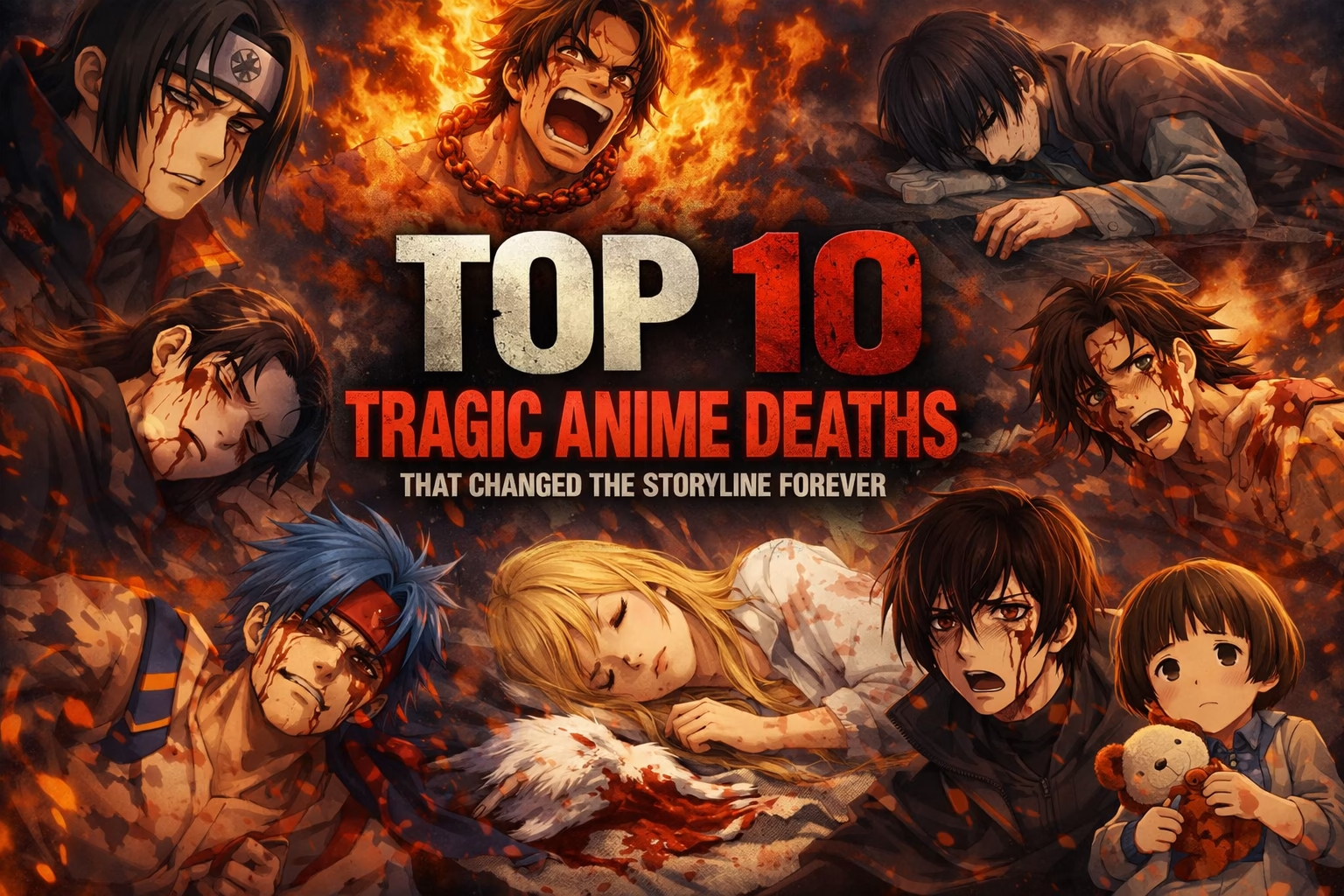
Top 10 Tragic Anime Deaths That Changed the Storyline Forever
Why Anime Deaths Hit Differently
There is nothing quite like an unexpected character death in anime to make your jaw drop, your heart shatter, and your entire perspective on a story shift overnight. Anime has always been bold enough to kill characters you love — not for shock value alone, but to drive powerful narratives forward in ways that live-action media rarely dares to attempt.
In this post, we count down the Top 10 Tragic Anime Deaths That Changed the Storyline Forever. These are the deaths that were more than just emotional moments — they fundamentally altered the direction, tone, and meaning of their entire series. Prepare yourself. Major spoilers ahead for all entries.
When a beloved character dies in anime, it often:
- Forces the protagonist to evolve or face their deepest fears
- Raises the stakes to levels that make every subsequent scene tense
- Creates thematic depth around sacrifice, consequence, and loss
- Permanently alters the power balance and direction of the story world
That is what separates memorable tragic anime deaths from forgettable ones. The best ones do not just break your heart — they break the story wide open.
Top 10 Tragic Anime Deaths That Changed the Storyline Forever
10. Maes Hughes – Fullmetal Alchemist: Brotherhood
Maes Hughes was the kind of character who existed purely to make you love him — warm, funny, devoted to his family, and always there with a kind word and an enthusiastic photo of his daughter. Which is exactly why his murder hit the FMA fandom like a freight train the moment it happened.
How it changed the story: Hughes’ death was the first time Fullmetal Alchemist: Brotherhood made it absolutely clear that no one was safe. His murder exposed the depth of the conspiracy within Amestris and set the entire plot on a darker, more urgent trajectory. It also gave Roy Mustang one of the most powerful and emotionally devastating character motivations in all of anime. Maes Hughes’ death transformed FMA from an adventure series into a genuine political thriller with life-or-death stakes.
9. L – Death Note
L was not just a character — he was the entire soul of Death Note’s psychological chess match. The eccentric, wild-haired, sweet-obsessed detective who sat toe-to-toe with Light Yagami was killed by the very game he was trying to win. His death was silent, unceremonious, and absolutely devastating.
How it changed the story: L’s death fundamentally changed Death Note’s identity overnight. The legendary cat-and-mouse dynamic that made the series a masterpiece was gone. The show introduced Near and Mello as successors, but the intellectual tension was never quite recaptured. L’s death proved that Light Yagami was genuinely capable of winning — making him far more terrifying as an antagonist and changing the tone of the entire remaining series.
8. Portgas D. Ace – One Piece (Marineford Arc)
Ace’s death at Marineford remains one of the most devastating moments in One Piece history and anime history as a whole. Luffy’s older brother — a character built up over hundreds of episodes as someone worth every sacrifice — died in Luffy’s arms just moments after being freed, struck down while shielding his little brother from an attack.
How it changed the story: Ace’s death shattered Luffy completely. It triggered a two-year time skip where Luffy trained harder than ever before, driven entirely by the grief of losing Ace. The Marineford arc permanently changed the emotional core of One Piece from a fun, lighthearted adventure into something that carries real weight about loss, power, and the cruelty of the world. It is widely considered the greatest arc in One Piece for good reason.
7. Itachi Uchiha – Naruto Shippuden
Itachi Uchiha spent most of Naruto as the ultimate villain — the man who massacred his own clan and left his little brother Sasuke traumatised and broken. When Sasuke finally defeats him, it feels like justice. Until the truth is revealed and everything changes in an instant.
How it changed the story: Itachi’s death — and the revelation that he had been secretly protecting Konoha and Sasuke all along, sacrificing everything including his own reputation — recontextualized the entire series. It sent Sasuke spiraling into one of the most compelling revenge arcs in shonen history, targeting Konoha itself. Itachi’s death is not just tragic — it is the single event that elevates Sasuke into one of anime’s greatest complex characters.
6. Sasha Braus (Potato Girl) – Attack on Titan
Sasha Blouse, affectionately known as “Potato Girl,” was the heart of the Survey Corps. Warm, funny, food-obsessed, fiercely brave, and deeply lovable — she represented the human warmth that made you care about everyone around her. Her sudden death in Season 4 shocked the entire fanbase to its core.
How it changed the story: Sasha’s death marked the point of no return for Attack on Titan’s final arc. It was a brutal reminder that the war the characters had chosen could not be walked back — that every action had irreversible consequences. Her death hardened Connie and Jean permanently and pushed the narrative firmly into its darkest, most morally complex territory. Nothing felt safe after Potato Girl was gone.
5. Jiraiya – Naruto Shippuden
Jiraiya was more than a mentor to Naruto — he was a father figure, a legend, and the embodiment of never giving up. His death fighting Pain alone in the Rain Village, deciphering the secret of Pain’s six bodies even in his final moments, is considered one of the greatest deaths in anime history by fans worldwide.
How it changed the story: Jiraiya’s death broke Naruto emotionally in a way no battle ever had. It also directly led to Naruto’s sage training and his confrontation with Pain — one of the most celebrated arcs in the entire series. Without Jiraiya’s death, there is no Sage Mode Naruto, no iconic Pain arc. His sacrifice was the catalyst that transformed Naruto from a young fighter into a true hero of the Hidden Leaf.
4. Kaori Miyazono – Your Lie in April
Your Lie in April was always a story about a farewell being written in real time, but knowing that Kaori was dying from the beginning did nothing to prepare viewers for the moment it actually happened. Kaori Miyazono — the violinist who brought Kousei back to life through music — left behind a letter that destroyed every single viewer who read it alongside him.
How it changed the story: Kaori’s death was not a plot twist — it was the entire point. Her passing completed Kousei’s transformation from a broken, music-less shell into a pianist who could finally play from his heart. It reframed every moment of joy in the series as something bittersweet and beautiful. Your Lie in April without Kaori’s death would be a completely different — and far less impactful — story.
3. Lelouch vi Britannia – Code Geass
Lelouch staged the most elaborate, self-sacrificing death in anime history. After orchestrating a world revolution, uniting all nations under a single ruler, Lelouch allowed himself to be publicly executed by his closest friend Zero — all to make himself the symbol the world needed to hate, so that peace could be built on his destruction.
How it changed the story: Lelouch’s death was the culmination of every plan, every manipulation, and every sacrifice in the entire series. It resolved the show’s central conflict, ended the cycle of hatred, and gave Nunnally — and the world — the freedom Lelouch had always wanted for them. His death was not just tragic; it was the most complete and deliberate character arc conclusion in anime history.
2. Whitebeard – One Piece (Marineford Arc)
Edward Newgate, Whitebeard — the man said to be the strongest in the world — died standing upright. After taking 267 sword wounds, 152 gunshots, and 46 cannon blasts, the King of the Seas refused to fall face-down. His final speech, declaring that One Piece exists and the Pirate King’s treasure is real, lit the fire that launched the New World era.
How it changed the story: Whitebeard’s death formally ended the era of the Great Pirate Captains and launched the chaotic New World era of One Piece. It validated the entire series’ premise, inspired an entirely new generation of pirates, and remains the single most epic death scene in One Piece history. Marineford Arc killed two legends — and the world of One Piece was never the same.
1. Nagato / Pain – Naruto Shippuden
While technically a sacrifice rather than a pure death, Nagato’s redemption and passing after his confrontation with Naruto stands as the most story-changing moment in the entire Naruto franchise. The man who destroyed the Hidden Leaf Village, killed Jiraiya, and embodied the cycle of hatred chose to believe in Naruto’s dream — and gave his life to resurrect everyone he had killed.
How it changed the story: Nagato’s death-through-redemption fundamentally shifted what Naruto was about. It proved that the show’s central theme — breaking the cycle of hatred through understanding, not force — was not just words. It set the philosophical foundation for everything that followed: Naruto’s relationship with Obito, his confrontation with Madara, and ultimately the final message of the entire series. No death in anime has ever more completely changed a story’s entire meaning.
Honourable Mentions: Tragic Anime Deaths That Almost Made the List
- Rengoku Kyojuro – Demon Slayer: His death launched the entire Upper Moon arc and broke the fanbase in half
- Nina Tucker – Fullmetal Alchemist: Brotherhood: One of the most heartbreaking moments in anime, ever
- Menma – Anohana: A death that began before the show started but defined every single moment of it
- Isla – Plastic Memories: A rare anime death you could see coming that still devastated completely
What Makes a Tragic Anime Death Truly Unforgettable?
Looking across all of these deaths, several patterns emerge that separate a truly unforgettable tragic anime death from one that is merely shocking:
- The death must matter to the plot — It cannot just be emotional; it must change the direction of the story fundamentally
- The character must be deeply loved — We need to have invested time and emotion before the loss lands
- The death must be earned — It should feel inevitable in retrospect, even if it was shocking in the moment
- The aftermath must be shown — How surviving characters react and change is what cements the death’s importance
Final Thoughts
Tragic anime deaths are not tragedies — they are transformations. Every death on this list made its series better, deeper, and more meaningful. They proved that anime is a medium willing to pay any price for authentic storytelling. That willingness to take risks, to break hearts, and to face real loss is exactly what makes anime one of the most powerful storytelling mediums on earth.
Which tragic anime death hit you the hardest? Let us know in the comments below.
Frequently Asked Questions
What is the most tragic anime death of all time?
While opinions vary, Jiraiya’s death in Naruto Shippuden and Kaori’s death in Your Lie in April are consistently ranked as the most emotionally devastating anime deaths among fans worldwide.
Which anime death changed the story the most?
Portgas D. Ace’s death in One Piece’s Marineford Arc fundamentally changed the direction of the entire series, triggering Luffy’s two-year training and reshaping the story’s emotional core permanently.
Are tragic anime deaths necessary for good storytelling?
Not always, but when done well — as with all the entries on this list — a character’s death can add layers of meaning, urgency, and emotional truth that no other storytelling device can replicate.
Which anime is known for the most character deaths?
Attack on Titan, Fullmetal Alchemist: Brotherhood, and Demon Slayer are known for not sparing beloved characters, making every fight scene genuinely tense and every relationship feel precious.
Do any of these anime deaths get reversed?
Nagato reverses the deaths he caused before passing himself. In most other cases — L, Ace, Jiraiya, Sasha — the deaths are permanent and that permanence is exactly what gives them their storytelling power.
Also Read
- One Piece Elbaf Arc Explained — Giants, Shanks' Secrets & Why This Changes Everything (2026)
- Re:Zero Season 4: Release Date, Story Arc, New Characters & Everything You Need to Know (2026)
- Spring 2026 Anime Season — Top 10 Most Anticipated Shows You Cannot Miss in April
- Jujutsu Kaisen Season 3 — Complete Guide
- Best Handheld Gaming Consoles of 2026
- 10 Underrated Anime Series You Must Watch in 2026
- One Piece Live Action Season 3: Release Date, Arabasta Plot, New Cast & Everything We Know (2026)
- Top 20 Most Haunted Places in the World That Will Terrify You (2026)
- Top 15 Most Beautiful Traditional Cultural Dresses from India
- Biggest IPL 2026 News You Can't Miss — Everything That's Happening Right Now
- Top 20 Best Devil Fruits in One Piece (Ranked by Power, Abilities & Awakenings)
- Best Anime Games to Play in 2025: Ultimate Guide for Every Fan
- Best Trending Games: Xbox Game Pass, PS Plus & Switch 2026
- Top 10 Best Places to Visit in India in 2026 — Ultimate Travel Guide
